
Materials Engineers assist industries in creating materials that are more durable, safe, and dependable for various materials and projects. They can be found in a wide variety of industries, including manufacturing, mining, construction, aerospace, automotive, and more. This guide details the occupation, ANZSCO 233112 skills assessment, visa pathways and pathway to Australia.
Home > Materials Engineer ANZSCO 233112
Resource Planning
Engineering Strategy
Team Management
Project Leadership
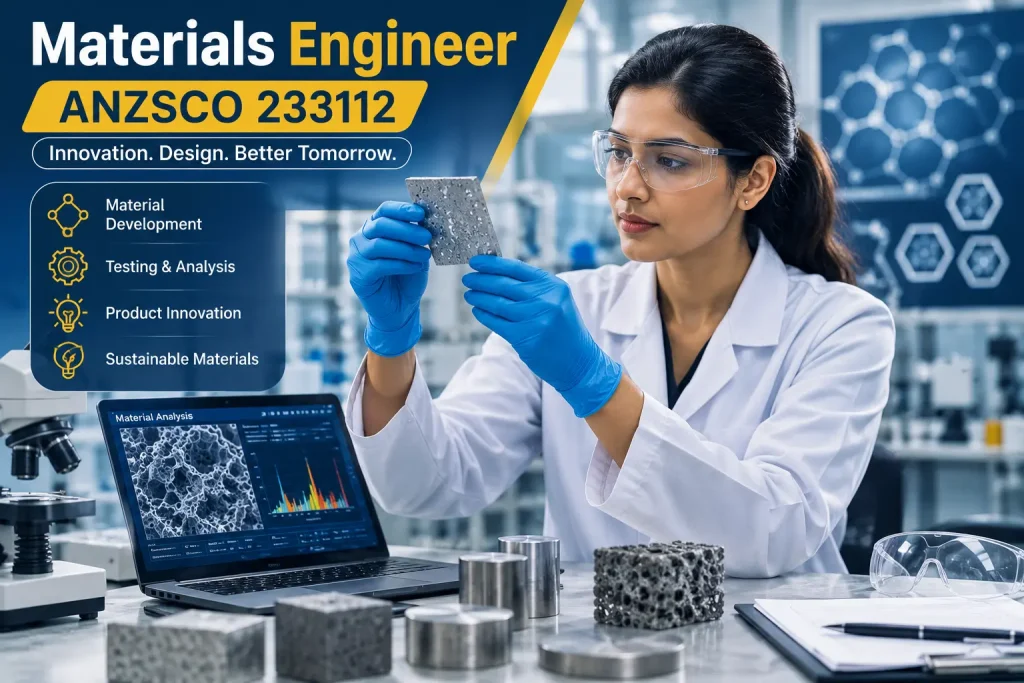
A Materials Engineer researches, designs, tests and enhances materials used in engineering and manufacturing. Their work is concerned with understanding the behavior of materials in different conditions and to improve their quality, durability and performance.
Materials Engineers are employed in the ANZSCO 233112 occupation list to assist organisations in the selection of appropriate materials for products, the development of more efficient methods of production, research and development projects, and investigations into material failures.
A Materials Engineer focuses on the material properties that are used to construct machines and structures, but a Mechanical Engineer designs machines.
Item | Details |
Occupation | Materials Engineer |
ANZSCO Code | 233112 |
Occupation Type | Professional Engineer |
Assessing Authority | Engineers Australia |
Skill Level | Skill Level 1 |
Common Visa Pathways | 189, 190, 491, 482, 186, 494 |
Materials Engineers work with different materials to improve product quality, performance, and safety. They are involved in the application of engineering knowledge and material science to address technical issues.
Typical duties include:
The materials that Materials Engineers work with could range from metals, plastics, ceramics, polymers, composites, glass, or advanced materials, depending on the employer.
Secretary General Australia 521211 is an occupation for skilled administrative professionals who provide secretarial, clerical, and administrative support to managers and professionals.
Materials Engineers are employed across many Australian industries.
Common workplaces include:
Many Materials Engineers also work in product development and quality assurance.
Materials Engineers need strong technical knowledge together with practical problem solving skills.
Important skills include:
Materials Engineers need excellent analytical abilities to recognize material issues and come up with solutions that can be implemented in practice.
An Insurance Broker works on their own, not tied to one firm. This person sells life, fire, accident, industrial, and other kinds of insurance for many insurance companies.
Many applicants search for ANZSCO 233112 skills assessment before starting the migration process.
For this occupation, the assessing authority is Engineers Australia.
Applicants normally complete their assessment through one of the recognised Engineers Australia pathways based on their engineering qualifications.
The assessment generally reviews:
Applicants who do not hold an accredited engineering qualification may need to prepare a Competency Demonstration Report (CDR) to demonstrate their engineering knowledge and professional experience.
Applicants should always consult the most recent Engineers Australia guidelines when applying, as the assessment requirements may change over time.
Materials Engineers typically have a bachelor’s degree or advanced degree in materials engineering, or a related engineering field.
Relevant qualifications may include:
In addition to having relevant work experience, applicants are required to have experience in the duties of Materials Engineer ANZSCO 233112.
A suitable job typically involves tasks like:
Work experience should clearly reflect engineering duties, and not just as a lab technician.
Document preparation for the assessment process can make a huge difference if it is done early.
Typical documents include:
Document | Purpose |
Passport | Identity verification |
Engineering degree | Qualification evidence |
Academic transcripts | Education details |
Employment reference letters | Confirms work experience |
Resume or CV | Career history |
Employment evidence | Supports claimed experience |
Competency documents as requested by Engineers Australia may also be required for those applying through the CDR pathway.
One of the most crucial components of your application is employment references.
A good reference should contain:
The engineering work you do should be clearly defined in your duties, including product development, manufacturing improvement, quality control, failure analysis, product testing, and engineering research.
The level of detail will generally give better evidence than a short letter with just a job title.
Skilled engineers are still in demand in various industries in Australia and many applicants are searching for Materials Engineer visa sponsorship Australia.
Employer sponsorship opportunities often depend on:
Qualifications that are recognised by the industry and relevant experience are the ones that are more competitive in the job market.
Many professionals ask how to migrate as a Materials Engineer to Australia.
While each applicant will have their own circumstances, a typical process will involve the following steps:
The final pathway will depend on your qualifications, work experience and on the migration regulations that are in place when you apply.
There are several migration pathways available in Australia for Materials Engineers.
Common visa options include:
Visa eligibility may change so applicants should always refer to the latest occupation lists.
Many applications are put on hold due to preventable errors.
Some common examples include:
Creating precise documents in advance of applying can enhance the assessment process.
Before starting your application:
You can prevent needless delays by careful preparation.
Materials Engineer ANZSCO 233112 offers excellent opportunities for qualified engineers who want to build a career in Australia. If you have relevant education and work experience, doing the right ANZSCO 233112 skills assessment with Engineers Australia is a crucial step. With well prepared documents and a clear understanding of the migration process, you can improve your chances of successfully working and living in Australia.
Web Administrator ANZSCO 313113 manages, maintains, and secures websites to ensure smooth performance, uptime, and user accessibility.
Who assesses Materials Engineer ANZSCO 233112?
Engineers Australia is the official assessing authority for this occupation.
Do I need a Materials Engineering degree?
Typically, a recognised engineering qualification in Materials Engineering or a related subject is required.
Can I apply for employer sponsorship?
Yes. Materials Engineer visa sponsorship Australia may exist based on the demand of the employer and the visa requirements.
Is work experience important?
Yes. The work history should be clear and show engineering work related to the ANZSCO occupation.
What are the most popular visas for the Materials Engineer occupation?
Some of the common pathways involve Subclass 189, 190, 491, 186, 482 and 494 visas depending on your eligibility and the Australian visa program.
Save Up To
On your Skills Assessment!
Get Expert Guidence for your Migration Skills Assessment. Australia’s leading consultants for ACS, Engineers Australia and Vetassess and Others with a 99% success rate.
Extra Save
On Whatsapp order

Scan the QR Code with your mobile to get a Discount

Contact Us
Our Services
100% Secure
SSL Encrypted
4.9/5 Rated
We accept:
VISA
Mastercard
Stripe
Wise
PayPal
Disclaimer:
Copyright © 2020 – 2026 Skillassessmenthelp 98% Success | Trusted in 65+ Countries | 4.9/5 Rated | 100% Secure Payments


