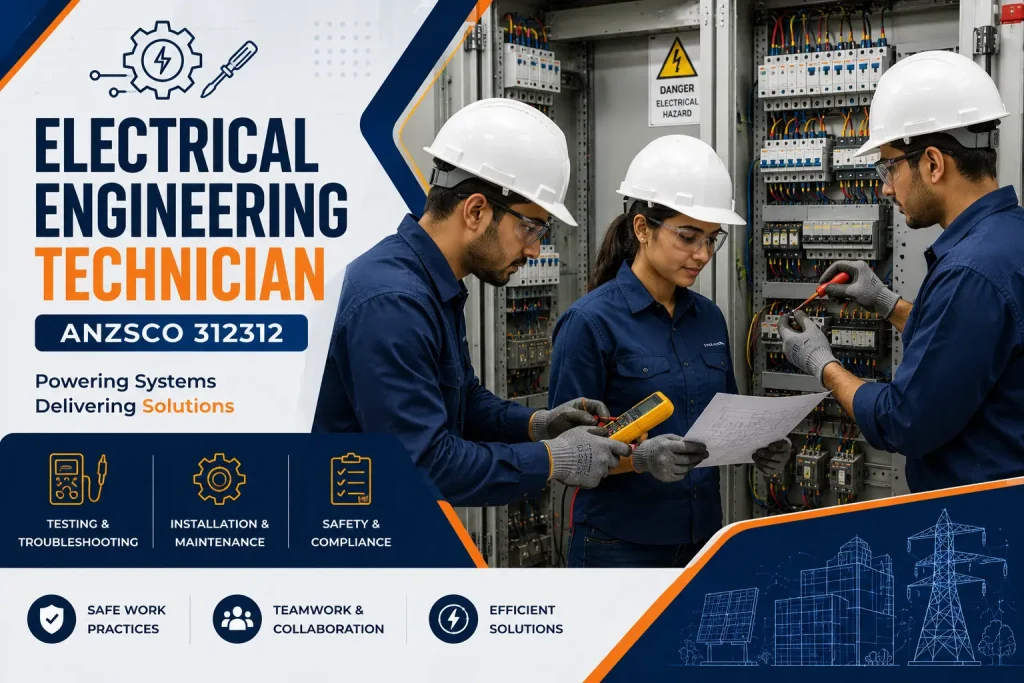
Electrical Engineering Technicians support Electrical Engineers in the design, installation, testing, operation and maintenance of electrical equipment and systems. They also support the project with conformability to engineering and safety standards, as well as successful operation. Knowing how to migrate to Australia is important, and an understanding of the ANZSCO 312312 skills assessment process is one of the first things you must do.
Home > Electrical Engineering Technician ANZSCO 312312
Technical Support
Fault Diagnosis
Equipment Maintenance
System Testing
An Electrical Engineering Technician provides technical support in the installation, testing, maintenance and operation of electrical systems and equipment. They interact with engineers to monitor electricity functioning, carry out inspections, troubleshoot faults, and help engineer projects in numerous industries.
Electrical Engineering Technicians, as part of the occupation category listed under ANZSCO code 312312, support in electrical testing, system maintenance, equipment installation, technical reporting and quality control to ensure efficient and safe electrical system operation.
In partnership with Electrical Engineers, Engineering Technologists, Engineering Draftspersons, Project Managers and maintenance teams.
Item | Details |
Occupation | Electrical Engineering Technician |
ANZSCO Code | 312312 |
Occupation Type | Engineering Associate |
Assessing Authority | Engineers Australia |
Skill Level | Skill Level 2 |
Common Visa Pathways | 189, 190, 491, 482, 494 |
Electrical Engineering Technicians provide practical support for electrical engineering projects.
Typical responsibilities include:
They play a crucial role in keeping electrical systems reliable and efficient, and safe to operate.
Electrical Engineering Technicians work across many industries in Australia.
Common employers include:
Some professionals specialise in:
Successful Electrical Engineering Technicians require both technical knowledge and practical problem-solving abilities.
Important skills include:
The skills enable technicians to assist engineers and ensure good operational electrical systems.
For most clients, nothing happens before they search for ANZSCO 312312 skills assessment before starting the migration process.
The skills assessment for Electrical Engineering Technician ANZSCO 312312 is typically done through Engineers Australia’s Engineering Associate pathway.
The assessment is designed to determine if you are qualified for and experienced in the occupation. Requirements for applicants include appropriate engineering knowledge, with practical technical experience.
The assessment generally reviews:
Applicants should always review the latest Engineers Australia assessment requirements before submitting an application because assessment criteria may change.
Typically, Electrical Engineering Technicians attain a diploma, advanced diploma, or similar degree in a related engineering field.
Suitable qualifications may include:
Your qualification should closely relate to the duties expected under Electrical Engineering Technician ANZSCO 312312.
Suitable employment may include responsibilities such as:
This is a position for an employee who has demonstrated Engineering Technician responsibilities, not Electrician or general maintenance responsibilities.
It’s important to have full documentation ready in advance when applying to avoid delays in the assessment process.
Document | Purpose |
Passport | Identity verification |
Qualification certificate | Educational evidence |
Academic transcripts | Qualification records |
Employment reference letters | Work experience verification |
Resume or CV | Career history |
Supporting employment documents | Engineering experience evidence |
Additional documents may be requested based on the assessment pathway.
Employment references are one of the most important parts of the skills assessment process.
A good employment reference will contain:
Engineering technician responsibilities need to be well-suited to depict testing of equipment, electrical inspections, technical support, monitoring systems, solving issues, equipment maintenance, and engineering reporting.
Detailed employment references are more powerful than ’employment confirmation’ letters.
Electrical Engineering Technician visa sponsorship in Australia is sought by many professionals, as engineering technicians continue to be in demand in such key industries as energy, manufacturing, construction and infrastructure throughout the country.
Employer sponsorship opportunities often depend on:
Opportunities for auto mechanics with experience in industrial facilities, renewable energy, and utilities or in large-scale infrastructure projects can take a turn for the better.
The common question asked by many applicants is How to migrate as an Electrical Engineering Technician to Australia?
While each migration route is unique, the overall plan typically follows these steps:
Migration pathways through the options available are contingent on your skills, experience and existing Australian migration conditions.
Civil Engineering Technicians help engineers with site inspections, technical data collections, construction material tests, project monitoring, and the verification of work to ensure engineering specifications are met.
There are a number of Australian migration schemes available to Electrical Engineering Technicians.
Common visa options include:
Visa eligibility can also change so applicants are always advised to check the up-to-date lists of occupations before applying.
Many applications delay due to inevitable errors.
Some common mistakes include:
Preparing accurate documentation can improve your assessment outcome.
Before submitting your application:
The depths of your application’s preparation are a source of strength.
Civil Engineering Draftspersons create engineering drawings and plans that are used by engineers, architects, and construction teams throughout a construction project.
Electrical Engineering Technician ANZSCO 312312 is a great trade for trade and laborers who offer technical assistance for electrical systems in Australia’s electric power, building and construction, manufacturing, telecommunications, and renewables sectors. If your qualifications and work experience match this occupation, completing the ANZSCO 312312 skills assessment through Engineers Australia is an important step towards Australian skilled migration. To ensure successful assessment results, proper documentation, thorough references to employment, and good preparation of assignments are encouraged.
Telecommunications Network Engineers design the network infrastructure, enhance telecommunications systems, and ensure reliable data transmission. They deal with fibre optic networks, mobile communication systems, broadband, cloud infrastructure and enterprise communication networks.
Who assesses Electrical Engineering Technician ANZSCO 312312?
Typically Engineers Australia applies the Engineering Associate assessment pathway to supplement an Electrical Engineering Technician ANZSCO 312312 skill assessment.
Should I undertake a related qualification?
Yes. Diploma, advanced diploma, or a related qualification at the diploma level or higher in Electrical Engineering, Electrical Engineering Technology, Engineering Technology, or related field is typically required.
Can I apply for employer sponsorship?
Yes. Electrical Engineering Technician visa sponsorship Australia is possible depending on the demand of the employer and the eligibility for the visa.
Is work experience important?
Yes. Your employment should clearly demonstrate engineering technician duties that match Electrical Engineering Technician ANZSCO 312312, including testing, inspection, maintenance support, technical reporting, and system monitoring.
What are some of the most popular Electrical Engineering Technician visas?
Depending on your eligibility and Australian migration needs, the paths to migration are often Subclass 189, 190, 491, 482 and 494 visas.
Save Up To
On your Skills Assessment!
Get Expert Guidence for your Migration Skills Assessment. Australia’s leading consultants for ACS, Engineers Australia and Vetassess and Others with a 99% success rate.
Extra Save
On Whatsapp order

Scan the QR Code with your mobile to get a Discount

Contact Us
Our Services
100% Secure
SSL Encrypted
4.9/5 Rated
We accept:
VISA
Mastercard
Stripe
Wise
PayPal
Disclaimer:
Copyright © 2020 – 2026 Skillassessmenthelp 98% Success | Trusted in 65+ Countries | 4.9/5 Rated | 100% Secure Payments