
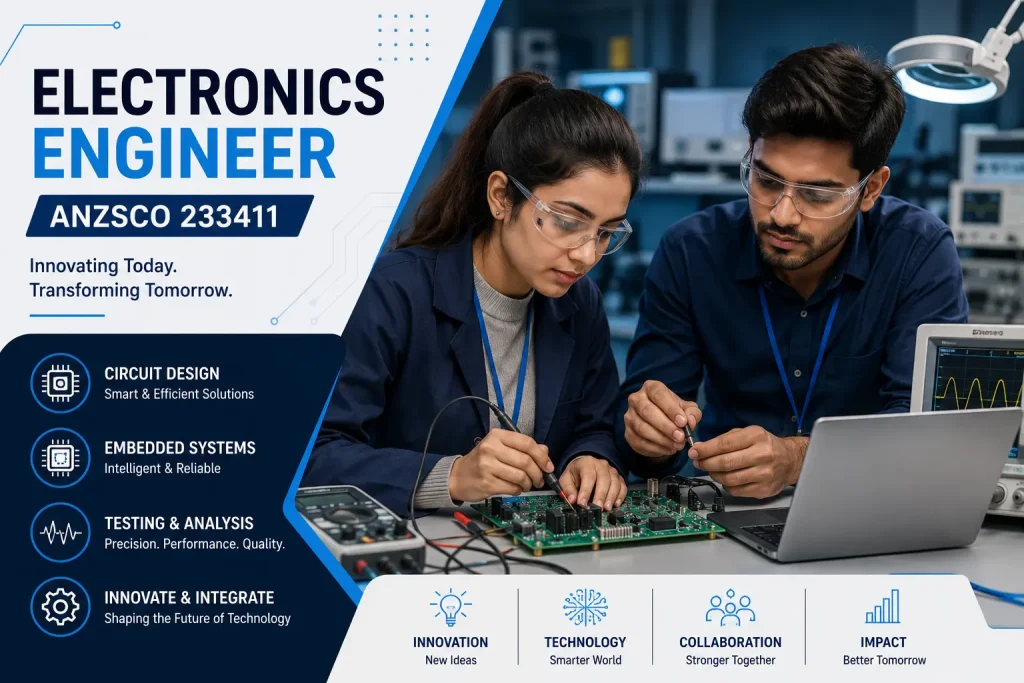
Electronics Engineer ANZSCO 233411 is a recognised engineering occupation for skilled migration to Australia. This occupation might be suitable if you have a background in designing electronic systems, developing communications equipment, or automation and control technologies. Electronics Engineers hold a key spot in many industries across Australia.
Home > Electronics Engineer ANZSCO 233411
Circuit Design
System Testing
Signal Processing
Electronic Systems
An Electronics Engineer designs, develops, installs, tests, and maintains electronic equipment and systems. They work on communication systems, electronic circuits, automation, embedded systems, control equipment, sensors, digital technologies and so on.
With occupation code ANZSCO 233411, Electronics Engineers address technical issues, optimize electronic devices and components, and safeguard systems to ensure engineering and safety specifications are adhered to.
They often team up with Electrical Engineers, Software Engineers, Mechanical Engineers, techs, and project managers on all kinds of engineering work.
Item | Details |
Occupation | Electronics Engineer |
ANZSCO Code | 233411 |
Occupation Type | Professional Engineer |
Assessing Authority | Engineers Australia |
Skill Level | Skill Level 1 |
Common Visa Pathways | 189, 190, 491, 482, 186, 494 |
Electronics Engineers develop systems that control, process, and transmit electronic information. They provide support to modern industries and day-to-day technology.
Typical duties include:
They are involved in enhancing the reliability, efficiency, and performance of the system.
Electronics Engineers work across many industries in Australia.
Common workplaces include:
Some Electronics Engineers also have a focus on embedded systems, robotics, industrial automation, communication networks and consumer electronics.
Electronics Engineers need strong technical knowledge together with practical engineering skills.
Important skills include:
Customer relations, working with engineers, contractors and project teams also benefit from good communication skills.
A Structural Engineer designs, analyses, and assesses structures to make sure they are safe, stable, and suitable for their intended use.
Many applicants search for ANZSCO 233411 skills assessment before beginning their migration process.
Engineers Australia is the official assessing authority for this occupation.
Depending on their qualifications, applicants will typically be evaluated using one of the Engineer’s Australia assessment pathways.
The assessment generally reviews:
Applicants with no accredited engineering degree may need the CDR pathway instead. This allows Engineers Australia to assess engineering knowledge and professional experience.
Engineers Australia assessment policy may change at any time, applicants are reminded to check the requirements before applying.
Electronics Engineers normally hold a bachelor’s degree or higher in Electronics Engineering or another closely related engineering discipline.
Relevant qualifications may include:
Electronics Engineer ANZSCO 233411 is the occupational category for your qualification.
Suitable work experience generally includes responsibilities such as:
The work experience section should clearly reflect professional engineering responsibilities instead of technician level responsibilities.
Transport Engineer ANZSCO 233215 is a recognised engineering occupation for skilled migration to Australia.
Getting your full set of papers ready before you apply can help the whole process go smoother.
Typical documents include:
Document | Purpose |
Passport | Identity verification |
Engineering degree | Qualification evidence |
Academic transcripts | Education details |
Employment reference letters | Confirms work experience |
Resume or CV | Career history |
Employment evidence | Supports claimed experience |
Applicants seeking to apply by the CDR route may also require to submit other Engineers Australia competency documents.
Reference letters count as one of the biggest parts of your application.
A good reference will contain:
The role should outline engineering tasks like electronic design, system development and testing, engineering system analysis, project management, and reporting.
Geotechnical Engineers play an important role in making construction projects safe and stable.
Detailed references are more indicative than short letters from employers that contain limited information.
Qualified electronics engineers continue to be sought after in all engineering, technology, manufacturing, defence and telecommunications firms all over this country, creating many interested parties to look for Electronics Engineer visa sponsorship Australia.
Employer sponsorship opportunities often depend on:
Candidates who have engineering experience and recognised engineering qualifications have greater weightage when applying for a sponsored position.
Many professionals ask How to migrate as an Electronics Engineer to Australia.
Every case looks a bit different, but the migration steps often go like this:
Your migration pathway depends on your qualifications, work experience, and the migration requirements that apply when you submit your application.
Australian migration fees are open to Electronics Engineers for several migration routes.
Common visa options include:
It is important for the applicants to always check their visa eligibility on the most recent occupation lists, as there can be updates to visa eligibility.
Avoidable mistakes cause many applications to be delayed.
Some common examples include:
Complete and accurate documents before the application will help you improve the assessment process.
Before starting your application:
Well prepared can minimize delays and enhance your application.
Electronics Engineer ANZSCO 233411 offers excellent opportunities for qualified engineers who want to build a successful career in Australia. Engineers Australia skills assessment is an important first step when applying for this occupation, if your qualifications and experience align. By preparing accurate supporting documents and understanding the migration process, you can improve your chances of successfully working and living in Australia.
Chemical Engineers work more on the design of process units of large scale production systems and the improvement of industrial processes, as opposed to laboratory chemists.
Who assesses Electronics Engineer ANZSCO 233411?
Engineers Australia is the official assessing authority for Electronics Engineer ANZSCO 233411.
Do I need an Electronics Engineering degree?
Candidates typically will require a recognized bachelor’s or higher degree in Electronics Engineering or a related engineering field.
Can I apply for employer sponsorship?
Yes. Electronics Engineer visa sponsorship Australia may be available depending on the need of your employer and visa requirements.
Is work experience important?
Yes. The work experience should clearly showcase engineering responsibilities of any professional nature relevant to the Electronics Engineer occupation.
What are the popular visas for Electronics Engineer?
There are various pathways to visas granted, which includes the visas in subclass 189, 190, 491, 186, 482 and 494 visas, depending on how one qualifies and what is happening in the Australian migration program at that particular time.
Save Up To
On your Skills Assessment!
Get Expert Guidence for your Migration Skills Assessment. Australia’s leading consultants for ACS, Engineers Australia and Vetassess and Others with a 99% success rate.
Extra Save
On Whatsapp order

Scan the QR Code with your mobile to get a Discount

Contact Us
Our Services
100% Secure
SSL Encrypted
4.9/5 Rated
We accept:
VISA
Mastercard
Stripe
Wise
PayPal
Disclaimer:
Copyright © 2020 – 2026 Skillassessmenthelp 98% Success | Trusted in 65+ Countries | 4.9/5 Rated | 100% Secure Payments