ICT Systems Test Engineers evaluate software and ICT systems through structured testing processes, identifying defects, ensuring functionality, improving performance, and delivering reliable, high-quality technology solutions that meet business requirements.
Home > ICT Systems Test Engineer
System Testing
Bug Detection
Quality Assurance
Test Automation
An ICT Systems Test Engineer checks if software and systems actually work. They do this before anything goes live. They hunt for bugs, test different features and make sure nothing is broken or out of place.
In simple words, they are the “quality checkers” of IT systems.
They work closely with developers and analysts. The goal is simple. Systems need to be safe, stable and reliable.
This role falls under the ICT Support and Test Engineers group in Australia.
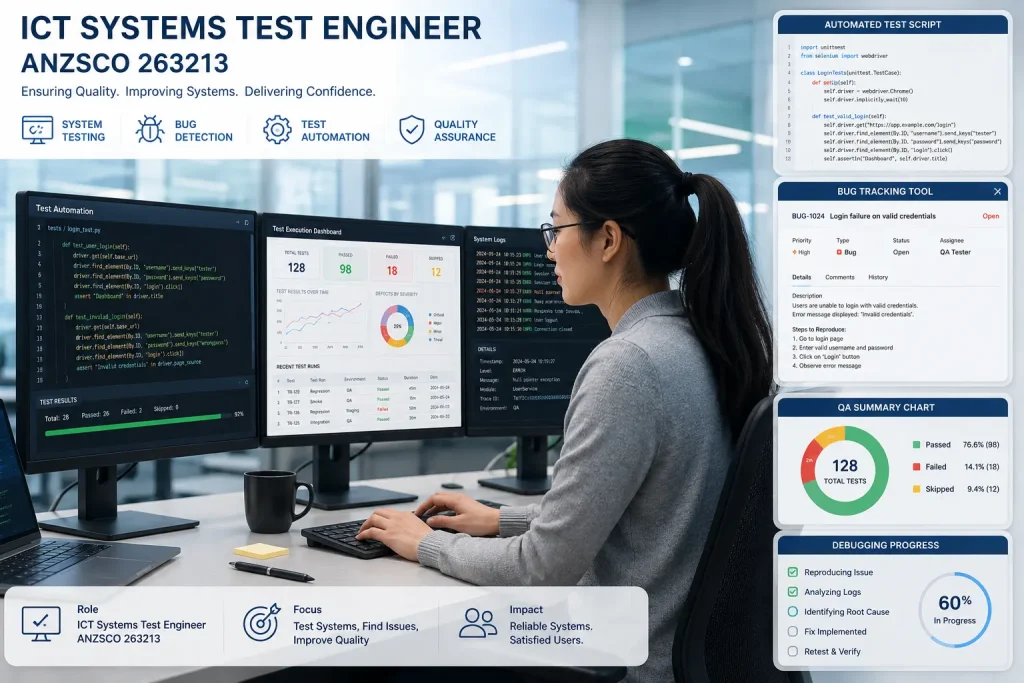
A Systems Test Engineer does these kinds of works:
They also use different tools to do the work. Things like automation testing software and defect tracking systems are pretty common in this kind of role.
To work in this role you need both technical and soft skills:
This occupation sits under STSOL, not MLTSSL. That changes your visa options.
Feature | STSOL | MLTSSL |
Subclass 189 access | Usually No | Yes |
State nomination | Yes | Yes |
Employer sponsorship | Yes | Yes |
Long term PR options | More limited | Stronger |
So what does this mean?
For migration, you must go through the Australian Computer Society (ACS).
They check:
You usually need:
The two roles come across as mixed up.
Simple way to remember:
Systems Test Engineers usually work in:
They typically work in an office or hybrid work environment.
Most teams are Agile, thus work is quick and project based.
Because this role is STSOL:
The likelihood will be dependent on:
ICT Systems Test Engineer ANZSCO 263213 is a good IT visa occupation in Australia, but is limited in visa options due to being listed as STSOL.
The work is technically sound and significant for software development projects particularly in assessing the stability and performance of the system.
If you plan to migrate, focus on building strong testing skills, automation knowledge, and getting a solid ACS assessment outcome.
Save Up To
On your Skills Assessment!
Get Expert Guidence for your Migration Skills Assessment. Australia’s leading consultants for ACS, Engineers Australia and Vetassess and Others with a 99% success rate.
Extra Save
On Whatsapp order

Scan the QR Code with your mobile to get a Discount

Contact Us
Our Services
100% Secure
SSL Encrypted
4.9/5 Rated
We accept:
VISA
Mastercard
Stripe
Wise
PayPal
Disclaimer:
Copyright © 2020 – 2026 Skillassessmenthelp 98% Success | Trusted in 65+ Countries | 4.9/5 Rated | 100% Secure Payments


