
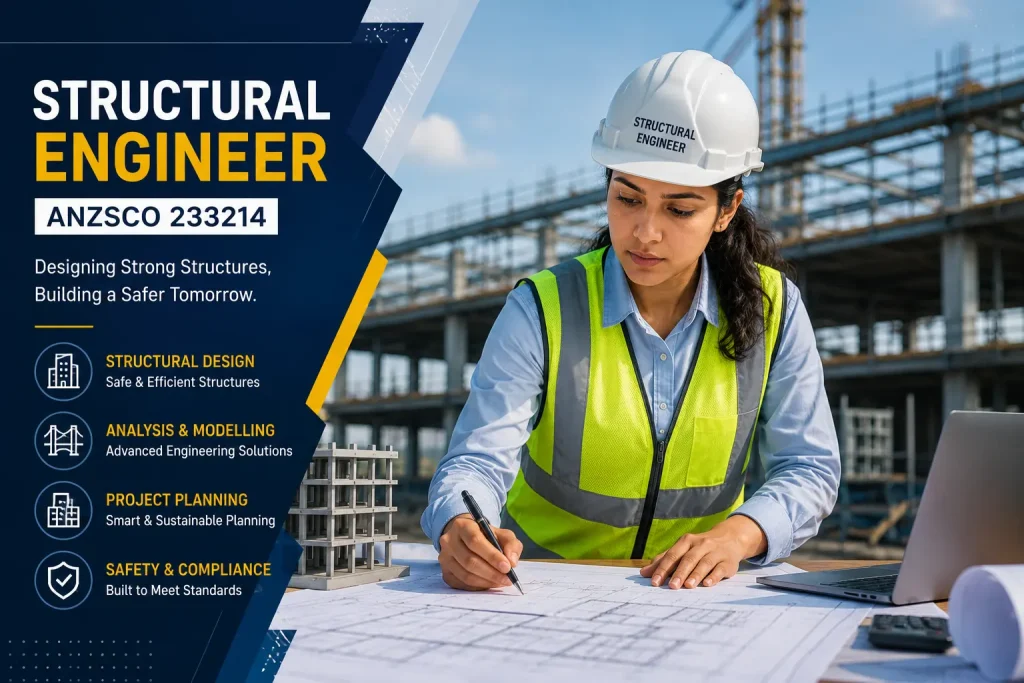
Structural Engineers help create safe and durable structures that can withstand different loads and environmental conditions. They closely collaborate with Architects, Civil Engineers and the construction workforce to ensure projects are in accordance with engineering standards. This guide outlines the occupation, ANZSCO 233214 skills assessment, visa pathways and the process to migrate to Australia.
Home > Structural Engineer ANZSCO 233214
Structural Design
Load Analysis
Building Safety
Project Inspection
A Structural Engineer designs, analyses, and assesses structures to make sure they are safe, stable, and suitable for their intended use. They estimate loads, determine the structural materials required and draft structural plans for residential, commercial, industrial and infrastructure construction projects.
Under the ANZSCO code 233214 occupation list, Structural Engineers help plan new structures, inspect existing buildings, identify structural issues, and recommend engineering solutions.
They play a vital role in projects where safety, strength, and durability are paramount.
Geotechnical Engineers play an important role in making construction projects safe and stable.
Item | Details |
Occupation | Structural Engineer |
ANZSCO Code | 233214 |
Occupation Type | Professional Engineer |
Assessing Authority | Engineers Australia |
Skill Level | Skill Level 1 |
Common Visa Pathways | 189, 190, 491, 482, 186, 494 |
Structural Engineers design structures that remain safe throughout their service life. They also inspect engineering plans and supervise the work of construction to guarantee the correct implementation of the plans.
Typical duties include:
They can be involved in either a small residential project, or a large infrastructure one.
Structural Engineers are employed across many sectors in Australia.
Common workplaces include:
Some Structural Engineers also specialise in earthquake resistant design, steel structures, reinforced concrete, timber structures, or bridge engineering.
Structural Engineers need strong technical knowledge together with practical engineering skills.
Important skills include:
Detailing is very important as any minor design fault can have an impact on structure safety.
Many applicants search for ANZSCO 233214 skills assessment before beginning their migration journey.
The official assessing body for this occupation is Engineers Australia.
Applicants are typically evaluated by one of the Engineers Australia’s recognised pathways determined by engineering qualifications.
Typically, the evaluation will examine:
Applicants with no accredited engineering degree may need the CDR pathway instead. This allows Engineers Australia to assess their engineering knowledge and professional experience.
Applicants should always check the latest assessment requirements before submitting an application.
The typical education that a Structural Engineer would have is a bachelor’s degree or higher in Structural Engineering, Civil Engineering, or a related engineering field.
Relevant qualifications may include:
You should be qualified to support the engineering tasks required for job ANZSCO 233214 Structural Engineer.
Suitable work experience generally includes responsibilities such as:
A work history should show real engineering duties, not just drafting or site tech work
Having a full document ready for assessment can ease the assessment process before they apply.
Typical documents include:
Document | Purpose |
Passport | Identity verification |
Engineering degree | Qualification evidence |
Academic transcripts | Education details |
Employment reference letters | Confirms work experience |
Resume or CV | Career history |
Employment evidence | Supports claimed experience |
Applicants who apply as a CDR applicant may also have to submit Engineers Australia competency documents.
Reference letters count as one of the biggest parts of your application.
A good reference will contain:
Engineering tasks should include specific work including structural design, engineering analysis, construction supervision, structural inspections, technical reporting, and project coordination.
A detailed employment reference tends to be more convincing than a short reference containing a minimal amount of information.
Experienced Structural Engineers are still in demand in the booming construction and infrastructure industries in Australia, which is why many applicants are looking for Structural Engineer visa sponsorship Australia.
Employer sponsorship opportunities often depend on:
Generally better employment prospects for applicants with recognised qualifications and with engineering experience.
Many professionals ask How to migrate as a Structural Engineer to Australia.
The steps can shift a bit case to case, but the process for migration usually looks like this:
The final migration path is dependent on qualification, experience and migration rules as they exist on the date of application.
There are multiple Australian migration pathways that may apply to Structural Engineers.
Common visa options include:
It is important that applicants check the most up to date occupation lists as visa eligibility can vary.
There are common errors that cause delays in many applications.
Some common examples include:
You can benefit your assessment process by having thorough and accurate documents ready before you apply.
Before submitting your application:
With careful preparation, you can minimize delays and enhance your application.
Structural Engineer ANZSCO 233214 offers excellent opportunities for qualified engineers who want to build a successful career in Australia. If you have the relevant qualifications and experience for this occupation, it is important that you undertake the relevant ANZSCO 233214 skill assessment through Engineers Australia. By preparing strong supporting documents and understanding the migration process, you can improve your chances of successfully working and living in Australia.
Chemical Engineer ANZSCO 233111 is one of the recognised engineering occupations for skilled migration to Australia.
Who assesses Structural Engineer ANZSCO 233214?
Engineers Australia is the official assessing authority for Structural Engineer ANZSCO 233214.
Do I need a Structural Engineering degree?
Normally applicants should have a recognised qualification in Structural Engineering, Civil Engineering or a closely related engineering subject.
Can I apply for employer sponsorship?
Yes. Structural Engineer visa sponsorship Australia may be available depending on employers’ demand and visa requirements.
Is work experience important?
Yes. The engineering roles you’ve had in your work history should be clearly structural engineering-related and align with the Structural Engineer occupation.
What are the most popular visas for Structural Engineer?
Most popular visa pathways include Subclass 189, 190, 491, 186, 482 and 494 visas, depending on the visa subclass that you are eligible for and the current visa program in Australia.
Save Up To
On your Skills Assessment!
Get Expert Guidence for your Migration Skills Assessment. Australia’s leading consultants for ACS, Engineers Australia and Vetassess and Others with a 99% success rate.
Extra Save
On Whatsapp order

Scan the QR Code with your mobile to get a Discount

Contact Us
Our Services
100% Secure
SSL Encrypted
4.9/5 Rated
We accept:
VISA
Mastercard
Stripe
Wise
PayPal
Disclaimer:
Copyright © 2020 – 2026 Skillassessmenthelp 98% Success | Trusted in 65+ Countries | 4.9/5 Rated | 100% Secure Payments


